















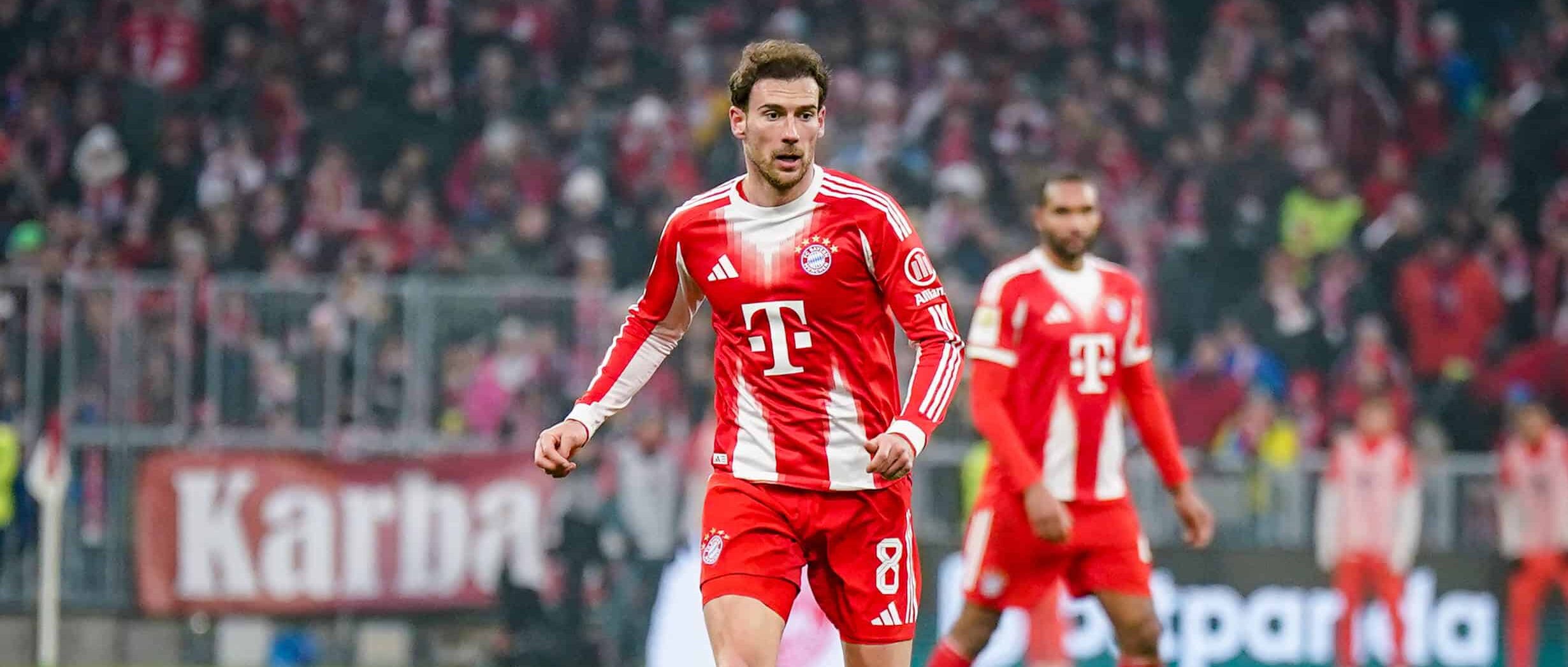
Leon Goretzka’s delayed Aston Villa debut may be partly explained by the significant change in workload he has experienced since moving to the Premier League, according to sports science specialist Markus Schauer.
The 31-year-old joined Villa on a free transfer on August 27 following his departure from Bayern Munich but is yet to make his competitive debut for Unai Emery’s side.
Goretzka recently revealed that his body had “reacted to the increased workload” following his arrival at Villa Park, and it has since emerged that irritation in his left knee will keep him unavailable until after the international break.
However, Schauer believes the midfielder’s difficulties should not necessarily be viewed as evidence that he arrived in England physically unprepared.
Premier League workload presents different challenge
Speaking to Abendzeitung, Schauer explained that the physical challenge of moving from the Bundesliga to the Premier League is not simply about becoming fitter.
Instead, players must repeatedly cope with high-intensity actions while having less time to recover.
“The Premier League doesn’t necessarily require a fitter player,” Schauer explained. “It requires a player to be able to handle very high intensity more frequently, with shorter recovery periods.”
Repeated sprinting, acceleration and deceleration can place considerable stress on the body, particularly when a player is adapting to a different training environment.
According to Schauer, that does not mean Goretzka was poorly prepared during his final months at Bayern.
“The body has to adapt to a slightly different workload profile and, in some cases, a different training intensity,” he added.
Missing Aston Villa pre-season could be significant
One major complication for Goretzka is the timing of his transfer.
The midfielder did not arrive at Aston Villa until August 27, meaning he missed the opportunity to complete a full pre-season programme under Emery and his coaching staff.
That period is important because it allows players to progressively build their tolerance for the repeated high-intensity demands they will encounter once competitive matches begin.
Schauer believes this could help explain why Goretzka’s body has struggled with the transition.
“If a player misses a full preseason, he doesn’t necessarily lack fitness, but possibly the gradually built-up tolerance for precisely these repeated high-intensity activities,” he said.
Villa therefore have little reason to rush the midfielder into action.
Aston Villa need patience with Goretzka
Goretzka arrived with considerable experience after spending eight seasons at Bayern Munich, but even a player of his pedigree may require an adaptation period after changing leagues, clubs and training environments.
His current knee issue has made that process more complicated.
For Emery, the priority will be getting Goretzka physically prepared to withstand Villa’s schedule rather than pushing him towards an early debut and potentially risking another setback.
The international break should provide valuable additional recovery and conditioning time.
If his rehabilitation progresses as planned, Villa will hope to finally integrate one of their major summer additions once domestic football resumes.
Key Points
- Leon Goretzka is yet to make his Aston Villa debut after suffering a knee problem following his summer arrival.
- Sports scientist Markus Schauer says Premier League players must repeatedly produce high-intensity actions with shorter recovery periods.
- Goretzka’s late August arrival meant he missed Aston Villa’s full pre-season programme, potentially affecting his ability to tolerate the increased workload.
- Villa are expected to give the 31-year-old time to recover and adapt rather than rushing him into Unai Emery’s team.
What’s Next?
Goretzka will use the coming weeks and international break to continue his recovery and build his tolerance to Aston Villa’s training demands.
Villa will hope the cautious approach allows him to return fully prepared, with his eventual debut expected after the international break if his knee responds positively.
0 Comments
First read message
Leave a comment
Your email address will not be published. Required fields are marked *