







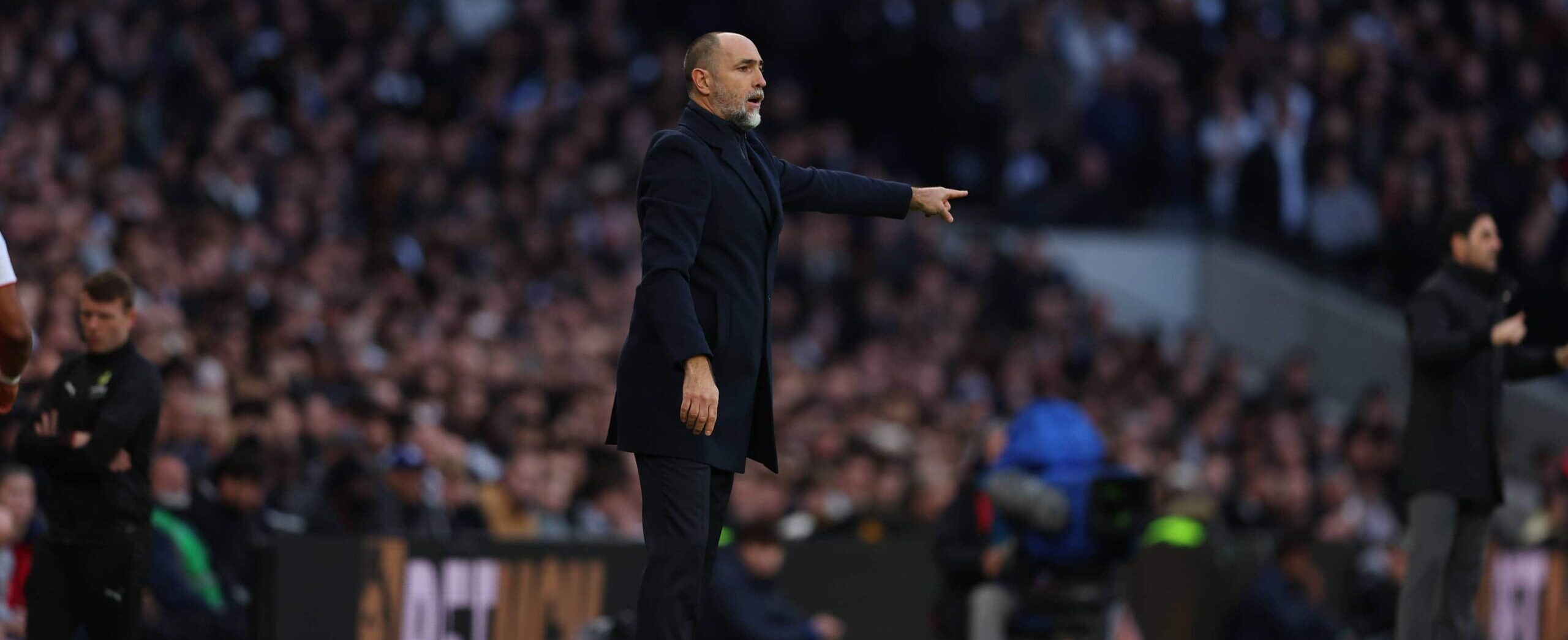
Tottenham’s wait for a Premier League win in 2026 continues after a 2-1 defeat to Fulham at Craven Cottage left Igor Tudor still searching for a response from his squad.
Fulham struck early through Harry Wilson before Alex Iwobi doubled the lead just past the half-hour mark. Richarlison’s second-half goal gave Spurs hope, but it proved insufficient as Marco Silva’s side held firm.
Here are three things we learned from another damaging afternoon for Tottenham.
1. No new manager bounce for Igor Tudor
Tudor had framed the week around urgency, stressing that results mattered more than implementing his preferred style. However, Spurs failed to show the immediate reaction often associated with a managerial change.
They conceded twice inside 34 minutes and did not register a single shot on target in the first half. While the second-half display showed marginal improvement, the broader issues remained.
Tottenham have now won just two of their last 19 league matches and sit perilously close to the relegation zone, with only four points separating them from 18th-placed West Ham.
Having followed Spurs’ recent fixtures closely, the lack of intensity from the opening whistle remains a persistent theme. However, it remains too early to conclude Tudor cannot shift momentum, with 10 league games still to play.
2. Senior players fail to answer Tudor’s rallying cry
Before the match, Tudor had publicly called on his “soldiers” to step up, suggesting that leadership and character would be decisive in the relegation fight.
The performance offered little evidence of that response.
Spurs were second best physically in key defensive duels and appeared uncertain in positioning. Radu Drăgușin and Micky van de Ven struggled to judge defensive triggers, allowing Fulham to control large periods of the first half.
Richarlison’s late emotion at full-time suggested commitment remains, but organisation and authority were lacking when it mattered most.
3. Formation change fails to solve structural issues
Tudor is typically committed to a 3-4-2-1 system, yet after Arsenal exposed vulnerabilities, he opted for a back four at Craven Cottage.
The adjustment did not bring defensive stability. Fulham dominated transitions early on, with Wilson’s opener highlighting Spurs’ positional confusion.
Spurs improved marginally after the break, but the damage had already been done.
The issue appears less about system and more about execution. Tactical flexibility offers options, but without sharper defensive reactions and stronger midfield control, structural tweaks will have limited impact.
Key Insights
- Tottenham remain without a league win in 2026.
- Spurs have won just two of their last 19 Premier League matches.
- Tudor’s tactical switch to a back four did not stabilise the defence.
- Senior players struggled to impose leadership.
- Only four points separate Spurs from the relegation zone.
What’s Next?
Tottenham face another crucial fixture within days, with momentum urgently required before the international break.
If Tudor is to steer Spurs away from danger, improvements in defensive organisation and first-half intensity must arrive quickly.
Can Tottenham rediscover resilience in time, or is the relegation fight becoming their defining battle?
0 Comments
First read message
Leave a comment
Your email address will not be published. Required fields are marked *