






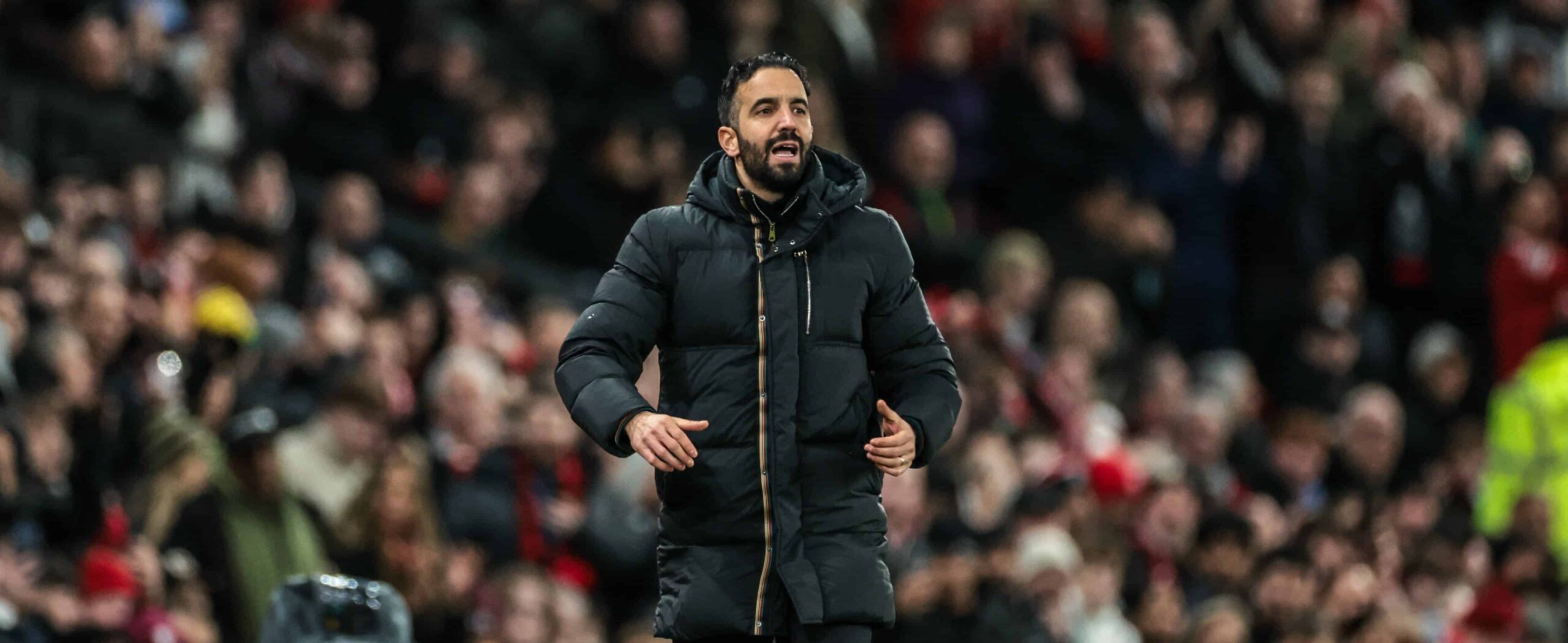
Manchester United’s decision to sack Ruben Amorim has been met with growing criticism in Portugal, where influential voices are now openly questioning the overall value of his 14-month spell at Old Trafford.
While debate in England has often centred on timing and instability, reaction in Amorim’s homeland has taken a harsher tone. One of the strongest assessments comes from Portuguese journalist Mário Cagica, director of TV show Bola na Rede.
“A poor body of work”
Speaking on Portuguese broadcaster SIC Notícias while previewing Sporting CP’s cup clash with Vitória de Guimarães, Cagica delivered a blunt verdict on Amorim’s time at Manchester United.
“For me, if we look at the overall body of work of Rúben Amorim, it is a poor job,” Cagica said.
“He did not meet objectives, the team evolved very little, and there is also the defeat in the Europa League final.”
Rather than focusing on individual performances or short-term improvements, Cagica argued that United failed to show sustained progress under Amorim — a key factor in justifying the club’s decision.
League position not the full story
Cagica did concede that the timing of Amorim’s dismissal is open to debate, particularly given United’s league position at the time of his exit.
“Rúben Amorim leaves Manchester United — although he was already in a more fragile position — with the team inside its objectives, close to the Champions League places,” he explained.
However, the journalist stressed that context matters. In his view, underlying issues outweighed the league table, with inconsistency and lack of tactical evolution undermining Amorim’s project.
Breakdown behind the scenes
According to Cagica, Amorim was aware that his standing within the club was weakening and tensions with the hierarchy became unavoidable.
“He was in a difficult situation,” he added.
“The team was extremely irregular and could not maintain high competitive levels in every match. Injuries did not help. Still, if we look at the whole picture, it is a poor body of work from Amorim.”
That perspective frames Amorim’s explosive final press conferences not as an isolated incident, but as the final stage of a relationship already beyond repair.
A harsher verdict from home
In Portugal, this assessment stands out for its lack of sentimentality. Rather than portraying Amorim as a coach denied time, the narrative increasingly suggests Manchester United acted logically — even belatedly — in ending an underwhelming cycle.
That view contrasts with some English commentary but reflects expectations shaped by Amorim’s success at Sporting, where standards were set high.
Key insights
- Portuguese media are increasingly critical of Amorim’s United spell
- Lack of tactical evolution cited as a major failing
- League position masked deeper performance issues
- Internal tensions accelerated the manager’s exit
- Sacking viewed in Portugal as a logical conclusion
What’s next?
Attention now turns to United’s next move, with Ole Gunnar Solskjær strongly linked with a return to Old Trafford. Whether the club opts for familiarity or a fresh direction, the Portuguese reaction suggests patience alone would not have solved the issues Amorim faced.
Manchester United are expected to clarify their interim and long-term managerial plans in the coming days. For Amorim, the focus will likely shift back to rebuilding his reputation elsewhere, with his Portugal-based critics now shaping a more sobering post-United narrative.
Were Manchester United right all along — or does Amorim still deserve sympathy for a project cut short?
0 Comments
First read message
Leave a comment
Your email address will not be published. Required fields are marked *