


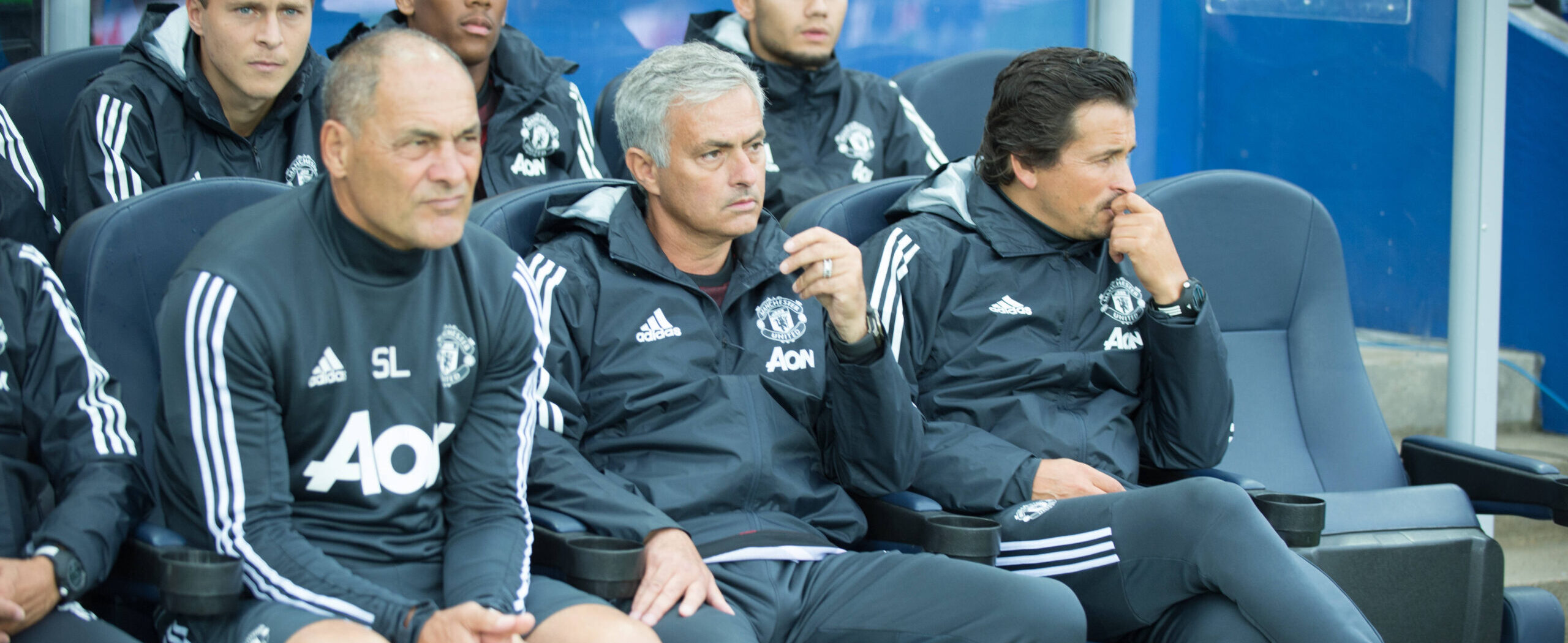
José Mourinho has always been larger than life — the “Special One” who conquered Europe with Porto, Chelsea, Inter Milan, and Real Madrid. His story is told in soundbites and trophies: the 2004 Champions League triumph, the 100-point La Liga season, the treble at Inter. But hidden behind the myth was a simple truth: Mourinho was never truly alone.
From 2002 until 2018, he carried with him a loyal backroom team, men who translated his vision into daily work on the training ground. They were his hidden generals, the engine behind the empire. Now, in 2025, Mourinho has returned to Benfica — the club where his managerial journey first began. He arrives not as the conquering hero of old but as a manager searching for renewal after a short-lived and disappointing spell at Fenerbahçe. And crucially, he returns without the Porto staff who defined his glory years. Their absence, more than anything, helps explain why Mourinho’s career has steadily declined since leaving Manchester United.
The Porto Core — The Hidden Engine of Greatness
When Mourinho took charge of Porto in January 2002, he inherited a team adrift. In two seasons, they were champions of Europe. The headlines celebrated Mourinho’s charisma and tactical brilliance, but the machinery of that success was his staff.
- Rui Faria, his closest assistant, introduced tactical periodisation, aligning every drill with tactical demands.
- Silvino Louro, the sharp-eyed goalkeeping coach, nurtured Vítor Baía, Petr Čech, and Júlio César.
- Baltemar Brito, Mourinho’s right-hand man, kept sessions structured and disciplined.
- André Villas-Boas, then a young analyst, produced meticulous opponent dossiers.
- José Morais added tactical insight and motivational presence.
Together, they formed a portable empire. With them, Mourinho dominated Portugal, England, Italy, and Spain. They delivered two Champions League titles, a UEFA Cup, multiple league championships, and even the historic 2010 treble with Inter.
Chelsea II & Manchester United — Cracks in the Foundation
By Mourinho’s second Chelsea spell in 2013, the core had thinned. Villas-Boas and Brito had gone, but Faria, Louro, and Morais remained — enough to fuel a Premier League and League Cup double in 2015.
At Manchester United (2016–2018), he again relied on Faria and Louro, adding Ricardo Formosinho. The Europa League and League Cup arrived in 2017, but the intensity that once defined his sides was fading. His confrontations grew louder. And then came the symbolic blow: Rui Faria’s departure in 2018, ending a 16-year partnership. Mourinho had lost his closest ally, the man who implemented his vision daily.
After United — Collapse Without the Core
From that moment, Mourinho’s trajectory shifted. Tottenham dismissed him before a cup final. Roma brought him a Europa Conference League trophy but persistent league struggles. Fenerbahçe ended abruptly after just over a season, with Champions League elimination against Benfica.
For the first time, Mourinho worked entirely without his Porto lieutenants. The results were telling: no defensive solidity, no consistent identity, and no sustained success.
Why the Staff Mattered So Much
Mourinho was always a master strategist and motivator, but not the coach who personally ran every drill. His genius depended on trusted deputies:
With them, Mourinho was a serial winner. Without them, the machine broke down.
“Mourinho was the architect, but his staff were the builders. When the builders left, the empire cracked.” — John William, FootballPlace analyst
Back to Benfica — A Full Circle Moment
Mourinho’s return to Benfica in 2025 is heavy with symbolism. This was where he began in 2000, a bold young coach with no trophies. A quarter of a century later, he returns with 25 titles but also the scars of recent failures.
The key question: can he succeed without the Porto core who once turned vision into reality? To thrive, he must forge a new inner circle capable of restoring identity and consistency.
José Mourinho – Staff, Records, and Trophies
| Club | Years | Staff Presence | Matches | Wins | Draws | Losses | Win % | Trophies |
|---|---|---|---|---|---|---|---|---|
| Porto | 2002–2004 | Full Porto core | 127 | 91 | 21 | 15 | 71.7 | 2× Primeira Liga, 1× Taça, UEFA Cup, Champions League |
| Chelsea I | 2004–2007 | Full Porto core | 185 | 124 | 40 | 21 | 67.0 | 2× Premier League, 1× FA Cup, 2× League Cup, Community Shield |
| Inter | 2008–2010 | Faria, Louro, Morais | 108 | 68 | 26 | 14 | 63.0 | 2× Serie A, Coppa Italia, Supercoppa, Champions League (treble) |
| Real Madrid | 2010–2013 | Faria, Louro, Morais, Karanka | 178 | 128 | 28 | 22 | 71.9 | La Liga (100 pts), Copa del Rey, Supercopa |
| Chelsea II | 2013–2015 | Faria, Louro, Morais | 136 | 80 | 29 | 27 | 58.8 | Premier League, League Cup |
| Man United | 2016–2018 | Faria, Louro, Formosinho | 144 | 84 | 32 | 28 | 58.3 | Europa League, League Cup, Community Shield |
| Tottenham | 2019–2021 | No Porto core | 86 | 44 | 19 | 23 | 51.2 | — |
| Roma | 2021–2023 | No Porto core | 138 | 68 | 30 | 40 | 49.3 | Europa Conference League |
| Fenerbahçe | 2024–2025 | No Porto core | 62 | 37 | 14 | 11 | 59.7 | — |
Analyst Verdict
FootballPlace analyst John William argues Mourinho’s legacy proves how vital his Porto staff were:
“Mourinho was the face, but his staff were the system. Rui Faria ensured tactical periodisation, Villas-Boas provided analysis, and Louro developed elite goalkeepers. Without them, Mourinho’s aura remained but the substance eroded. His return to Benfica is fascinating — not just to see if he can still win, but whether he can build a new trusted circle from scratch.”
Key Insights
- Mourinho’s Porto staff (Faria, Louro, Villas-Boas, Morais, Brito) underpinned his golden years.
- The departure of Rui Faria in 2018 marked the beginning of his decline.
- Post-United spells at Spurs, Roma, and Fenerbahçe lacked consistency and trophies.
- Mourinho now returns to Benfica, the club where his journey began in 2000.
- Success depends on building a new backroom team capable of restoring identity.
What’s Next for Mourinho and Benfica?
Mourinho’s Benfica return is heavy with symbolism but fraught with risk. The Portuguese giants are chasing domestic dominance and renewed European relevance, but patience is rarely abundant. Early results will matter. If Mourinho cannot instil cohesion quickly, doubts will intensify over whether the Special One still has the capacity to evolve.
For Mourinho personally, this may be the last great chance to reshape his legacy. If he can build a new staff to replicate the effectiveness of his Porto lieutenants, Benfica could become the stage for a remarkable late-career renaissance. If not, history may remember his decline as the story of a genius who lost his generals.
1 Comment (last comment by Adem)
First read message
By Adem 18 Sep 2025 13:15
The importance of Villas-Boas?! Not at the Treble season for Inter, because someone else was there, but wow I didnt know this tbh
Leave a comment
Your email address will not be published. Required fields are marked *