
















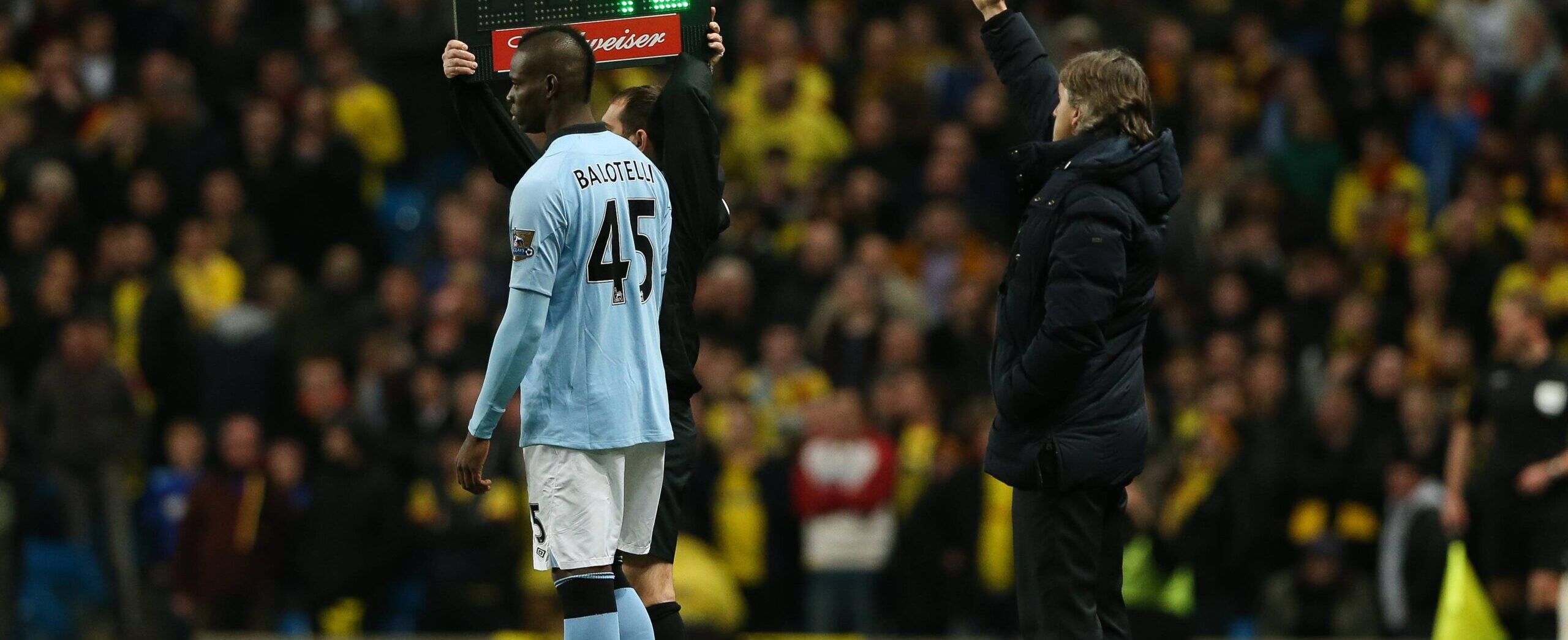
Mario Balotelli has admitted that his early years at Manchester City were marked by loneliness and intense media pressure, confessing he “wasn’t used to” the level of scrutiny he faced in England.
The Italian striker, now 35, spoke candidly at the Trento Sport Festival about the highs and lows of his career — including how life in Manchester changed him as both a player and a person.
Balotelli joined City from Inter Milan in 2010 under Roberto Mancini, arriving as one of Europe’s brightest young forwards. Yet his time in England was as memorable for the headlines as for his goals, with the forward often portrayed as a mischievous figure by the British tabloids.
Speaking to reporters (via Calciomercato), Balotelli reflected on that experience and the challenges of living abroad for the first time.
“My experience with Inter was part of my development, but I think England shaped me the most. It was the first time I was alone, my family wasn’t there, and I wasn’t used to it. It shapes you for better or for worse, because you make mistakes and have to get out of them on your own.” — Mario Balotelli, Trento Sport Festival
Manchester City years: “Why Always Me?” and media obsession
Balotelli’s “Why Always Me?” celebration against Manchester United in October 2011 remains one of the Premier League’s most iconic moments. The striker revealed the shirt slogan was a spontaneous idea shared with a kit room worker before the game — and a light-hearted reaction to the media frenzy surrounding him.
“I had it before the match with a warehouse worker. I was the centre of attention for my problems, and it was a nice outburst. The tabloids in England went overboard with me.” — Mario Balotelli
Balotelli also addressed the infamous house fire incident in Cheshire, which was widely reported at the time as a reckless prank. He clarified that the fire was caused by friends of his brother, insisting the incident was blown out of proportion.
“The one I regret? The house in England that caught fire — a prank by two of my brother’s friends — because it was dangerous,” he said. “But I haven’t done anything as big as they seem or as they say, to the point of regretting it.”
From controversy to maturity
Despite the controversies, Balotelli’s time at City delivered silverware and unforgettable moments. He played a key role in helping Roberto Mancini’s side win their first Premier League title in 2012, famously providing the assist for Sergio Agüero’s last-gasp winner against QPR.
Since leaving England, the Italian has rebuilt his career across several leagues, including successful spells with AC Milan — where he scored 18 league goals in 2013/14 — and Nice, netting 33 times in Ligue 1.
Now, Balotelli speaks with the perspective of experience rather than defiance. The striker acknowledges that his youthful impulsiveness attracted negative attention but insists much of the media portrayal was exaggerated.
Analyst Verdict — John William, FootballPlace
In my view, Balotelli’s comments show a player who has finally made peace with his past. His story reflects the psychological strain that intense scrutiny can place on young footballers abroad — particularly those thrust into superstardom at 20.
We believe his time at Manchester City, though chaotic, was formative. Balotelli remains one of the most naturally gifted forwards of his generation, and his candour now may redefine how fans remember him — not just as a headline-maker, but as a complex and self-aware figure in football history.
Key Insights
- Mario Balotelli says England “shaped” him the most, both positively and negatively.
- Admits loneliness and media scrutiny made early years in Manchester difficult.
- “Why Always Me?” shirt was a playful jab at tabloids, not planned provocation.
- Regrets the 2011 house fire incident but says the story was exaggerated.
- Won the 2012 Premier League title and shone for Italy at Euro 2012.
What’s Next for Balotelli
Now 35, Balotelli is without a club but remains active in the football community, occasionally featuring in Italian media and youth development events. His reflections at Trento suggest a desire to stay connected to the game — perhaps as a mentor or pundit.
While his playing days may be winding down, Balotelli’s legacy as one of football’s most captivating and misunderstood characters endures.
👉 Do you think the media was too harsh on Mario Balotelli during his Manchester City days?

0 Comments
First read message
Leave a comment
Your email address will not be published. Required fields are marked *