



















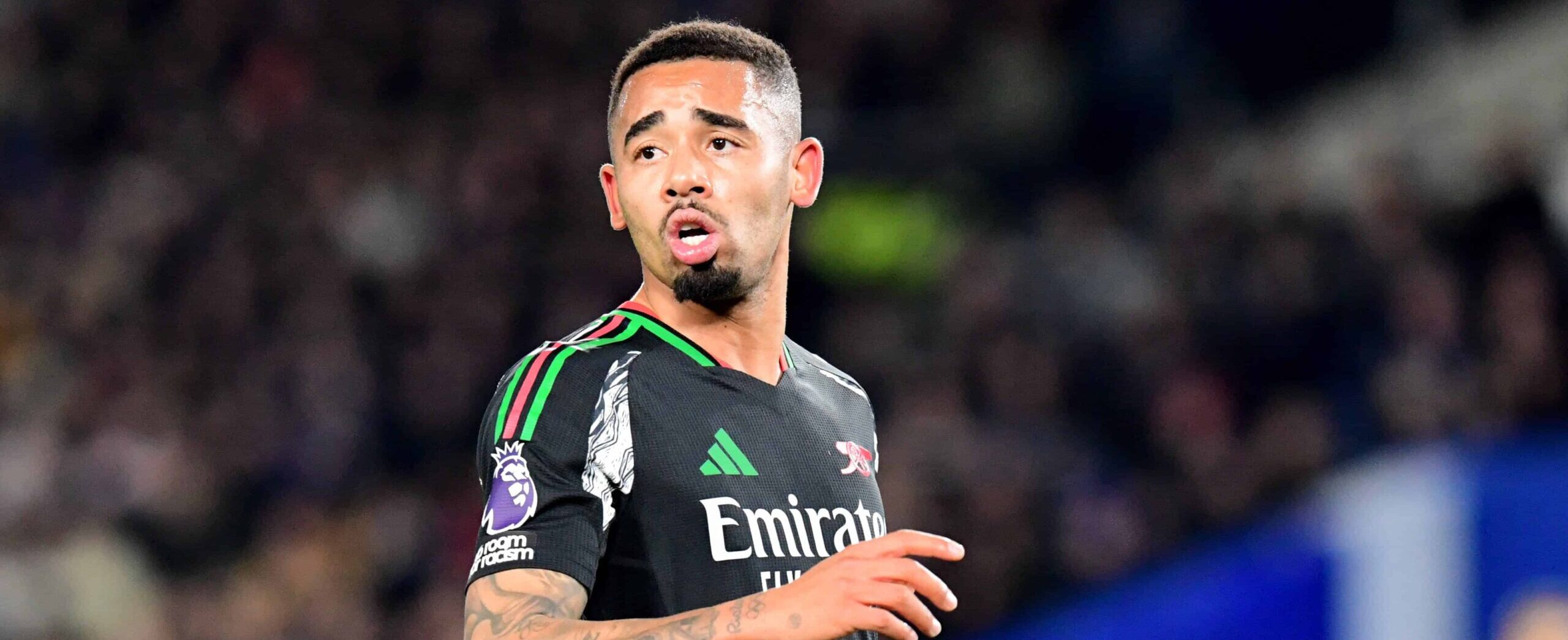
Gabriel Jesus has given one of his most honest and reflective interviews since joining Arsenal, opening up about his long knee injury, his life in England, the pressures of football in Brazil and the ambitions that still drive him at 28. Speaking to Globo Esporte, the Brazilian detailed the exact moment his injury “hit” him — and how nearly a year out reshaped the way he sees football and life.
Jesus has now been cleared to return after ten months on the sidelines. His absence has forced Arsenal to evolve tactically, but his comeback arrives at a crucial stage of the season as Mikel Arteta looks to re-energise the forward line. For a player who has lived almost a decade in England, this feels like a reset — a second chapter defined by maturity, family and an evolved self-understanding.
“That’s When It Hit Me”: Jesus on the Injury Moment
Jesus recalled the moment he first realised his knee damage was serious:
“I thought it was nothing. I even played another 10 or 15 minutes. When the doctor told me I had damaged the entire knee, that’s when it hit me.”
He said the recovery timeline initially crushed him — the doctor warned it could take at least 12 months. He worked through the process slowly, spending two critical months in Brazil for the birth of his son. That period, he said, helped him mentally: a necessary pause rather than a setback.
At 28, Jesus believes he still has “many years” at the top level and has no fear about returning to full capacity.
London Life Changed His Perspective
Now in his ninth year in England, Jesus spoke warmly about life in London. From family parks to simple routines, he says London helped him see Brazil differently.
“Where I come from, there are no parks. Here, five minutes from home, there’s a park for your family,” he said — a reflection of how lifestyle stability has shaped him.
He even occasionally takes Uber to training or dinners, finding joy in the normality of everyday life. Even Tottenham-supporting drivers, he joked, are “friendly enough to ask for a picture”.
English Pressure vs Brazilian Pressure
Jesus drew a sharp comparison between the two footballing cultures:
- In Brazil, he said, pressure is constant and emotionally intense.
- In England, players are allowed to decompress after setbacks.
“If we lose, we can still go to dinner without people attacking you,” he noted. This emotional breathing space, he believes, helps players perform more consistently.
“I Don’t Want a Label”: Jesus on His Role
Jesus rejected the idea that he must fit the stereotype of a No.9:
- He likes drifting wide.
- He likes combining.
- He grew up as a winger.
- He isn’t someone who stands in the box “for 90 minutes waiting”.
The striker clarified a misunderstood 2023 quote — he never said scoring isn’t his strength, only that classic No.9s have different profiles.
This versatility is part of why Arteta values him so highly: Jesus presses, rotates, combines and destabilises in ways few centre-forwards do.
Working Under Mikel Arteta
Jesus praised Arteta repeatedly, calling him “intense, obsessed and willing to sacrifice everything to win”. He believes Arsenal’s growth is steady and sustainable — but also that major silverware is overdue for a team with such ambition.
Having covered Arsenal throughout the Arteta era, this resonates. Jesus was signed to elevate Arsenal in high-pressure moments. In our view, his absence last season removed a crucial emotional and tactical spark — one the team has struggled to replace consistently.
Family, Faith and a New Maturity
Fatherhood changed him.
Faith grounds him.
Age gave him perspective.
Topics that once triggered him — a fatherless childhood, the weight of the 2018 World Cup, early criticism at Manchester City — now feel resolved. He sees them as chapters that built him, not scars that defined him.
Looking Ahead
Jesus wants to return to Brazil’s national team and still dreams of winning a Club World Cup with Palmeiras. But in the short-term, his focus is singular: help Arsenal win major trophies again and rebuild rhythm after injury.
He also reflected warmly on Pep Guardiola’s impact on his early career — calling him “special” and instrumental in shaping his footballing identity.
Analysis: What Jesus’ Return Means for Arsenal
Having followed Arsenal closely, Jesus’ comeback may influence the team in three key ways:
- Emotional Lift
Arsenal lacked his energy, aggression and unpredictability in big games. Jesus lifts intensity around him. - Tactical Flexibility
His ability to drift wide allows Arteta to use fluid front threes — a cornerstone of Arsenal’s best football. - Pressure Reduction on Saka & Martinelli
Both were overburdened in his absence. Jesus’ rotations ease their workloads.
Although some argue Arsenal now need a more clinical striker, this misses the nuance: Jesus was never signed to be Erling Haaland. He was signed to be Gabriel Jesus — and Arsenal’s structure thrives on players like him.
A counterpoint: his fitness record remains a concern. Arsenal must manage his minutes carefully, especially in consecutive high-intensity fixtures.
Why Jesus’ Mental Reset Matters
Jesus’s growth off the pitch may be the most important development of all. Players returning from long injuries often struggle mentally more than physically. His shift in perspective — grounded in fatherhood, routine and emotional balance — creates a foundation for sustained high-level performance.
Key Insights
- Gabriel Jesus opens up on the moment he realised his knee injury was serious.
- He is fully cleared to return after nearly 12 months out.
- London and fatherhood have reshaped his perspective.
- He rejects a strict positional label and praises Arteta heavily.
- Jesus wants major trophies with Arsenal and a return to Brazil’s national team.
What’s Next?
Jesus is expected to feature gradually in Arsenal’s upcoming games as Arteta manages his fitness. If he regains rhythm quickly, he could become one of the decisive players in the second half of the season.
👉 Arsenal fans — what role should Jesus play now he’s back: starter, rotational spark, or wide forward?
0 Comments
First read message
Leave a comment
Your email address will not be published. Required fields are marked *