











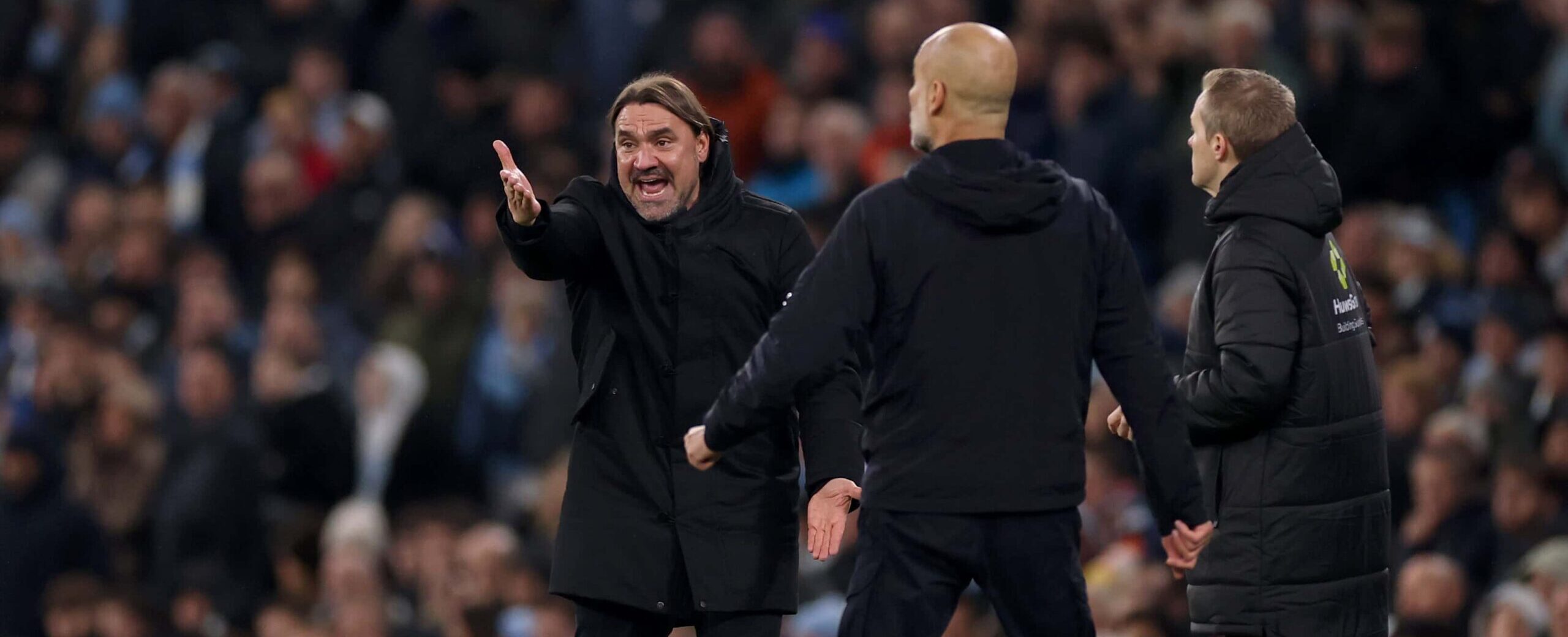
Daniel Farke cut a mixture of pride and frustration after Leeds United’s narrow 3–2 defeat to Manchester City, praising his players’ courage while openly questioning the legitimacy of Gianluigi Donnarumma’s second-half stoppage. The Leeds boss was visibly furious on the touchline when the City goalkeeper went down on 58 minutes — at a time when the visitors were under sustained pressure and Leeds were firmly on top.
Farke protested immediately to the fourth official, believing Donnarumma’s “injury” offered City a tactical pause disguised as medical treatment. It also allowed Ruben Dias to quickly assemble his teammates in a touchline huddle while Leeds’ momentum stalled.
Farke calls out ‘fake injury’ but avoids criticising Guardiola
The focus keyphrase Farke Leeds fake injury Man City anchors the core of the post-match debate. Asked directly about the incident, Farke made little attempt to hide his frustration.
“Everyone knows why he went down, right? It’s not the elephant in the room. If I like it in terms of fair play… I keep it to myself. But it was obvious.” — Daniel Farke
Pressed to elaborate, he took aim at the loophole rather than Pep Guardiola.
“If we don’t educate players in terms of fair play and bend rules to your advantage and do a fake injury for an additional team talk… it’s nothing I personally like. It’s within the rules, it’s smart. But I think there should be a change.” — Daniel Farke
Having followed Premier League touchline controversies over the years, this is not the first time managers have complained about tactical “injuries” being used as unofficial timeouts. Although some coaches insist it’s inevitable in modern football, other indications — like Farke’s comments — suggest pressure is growing for procedural reform.
Leeds impressed despite sucker punches
Beyond the incident, Farke remained full of admiration for his players, who twice fought back and pushed City into uncomfortable territory.
Leeds conceded early, but the manager praised their response, highlighting tactical adjustments made at half-time involving pressing height and passing angles. Those changes helped swing the momentum until Donnarumma’s stoppage interrupted the flow.
“We played one of the best sides in the world. We fully deserved to equalise. Both teams could have won it… after so many sucker punches, such a performance should give us belief.” — Daniel Farke
Farke insisted his players should leave Manchester proud, not deflated. Despite the defeat, Leeds’ blend of bravery, precision and counter-pressing hinted at a side capable of troubling elite opponents — something he believes must become a source of confidence.
Numbers That Tell the Story
While Leeds left empty-handed, their second-half spell leading up to the Donnarumma stoppage was one of their strongest of the season. From my experience analysing Leeds under Farke, this pattern is familiar: once they settle into their hybrid pressing structure, they can impose themselves on superior squads with sustained aggression.
Although some tactical models predicted a routine City win, other indications — especially Leeds’ expected-goals surge after half-time — point to a much closer contest than pre-match odds suggested.
The broader issue behind Farke’s complaint
In our view, Farke’s comments tap into a long-standing frustration managers have with the “injury timeout” loophole. Because goalkeepers can legally receive treatment without forcing a substitution, teams often exploit these pauses to reset shape or disrupt momentum. Although some argue this is simply smart in-game management, Farke’s stance highlights a nuance: fairness can be compromised when the game effectively pauses for tactical benefit rather than genuine concern.
It’s worth questioning whether IFAB will eventually address this trend. Temporary removal of the treated player, independent medical checks, or stricter time-delay rules have all been floated in internal discussions. Farke’s public frustration may add weight to that conversation.
Another nuance lies in Leeds’ evolving identity. Their performance against City confirms they are no longer intimidated by top opponents. The confidence Farke references is not hyperbole — it’s a reflection of a squad whose tactical development is accelerating rapidly.
Leeds’ mentality shift under Farke
One angle underreported is the psychological leap Leeds have made this season. In previous years, a controversial moment like Donnarumma’s stoppage might have derailed the team emotionally. Instead, they continued pressing, continued attacking, and kept the game alive until the final whistle. This shows a resilience that Farke has worked to hard-wire into the squad — a key reason Leeds now feel competitive even against elite sides.
Key Insights
- Farke believes Donnarumma faked injury to give Man City an unofficial timeout.
- The Leeds boss wants rule changes to prevent tactical manipulation.
- Leeds produced a strong second-half performance and deserved something from the match.
- Farke praised his players’ bravery and said the result should give them belief.
- Dias used the stoppage to organise a huddle that disrupted Leeds’ momentum.
What’s Next
Leeds return home next weekend aiming to build on a performance their manager described as one of the most encouraging of the season. If they can replicate their second-half intensity — without being derailed by controversial moments — their upward trajectory under Farke should continue.
👉 Leeds fans — was Farke right to call out the Donnarumma incident, or is this just part of modern football?
1 Comment (last comment by JamesLove)
First read message
By JamesLove 29 Nov 2025 21:15
When is Farke gone? Chelsea next at home right? 2e half was good, but somehow not good enough..
Leave a comment
Your email address will not be published. Required fields are marked *