



















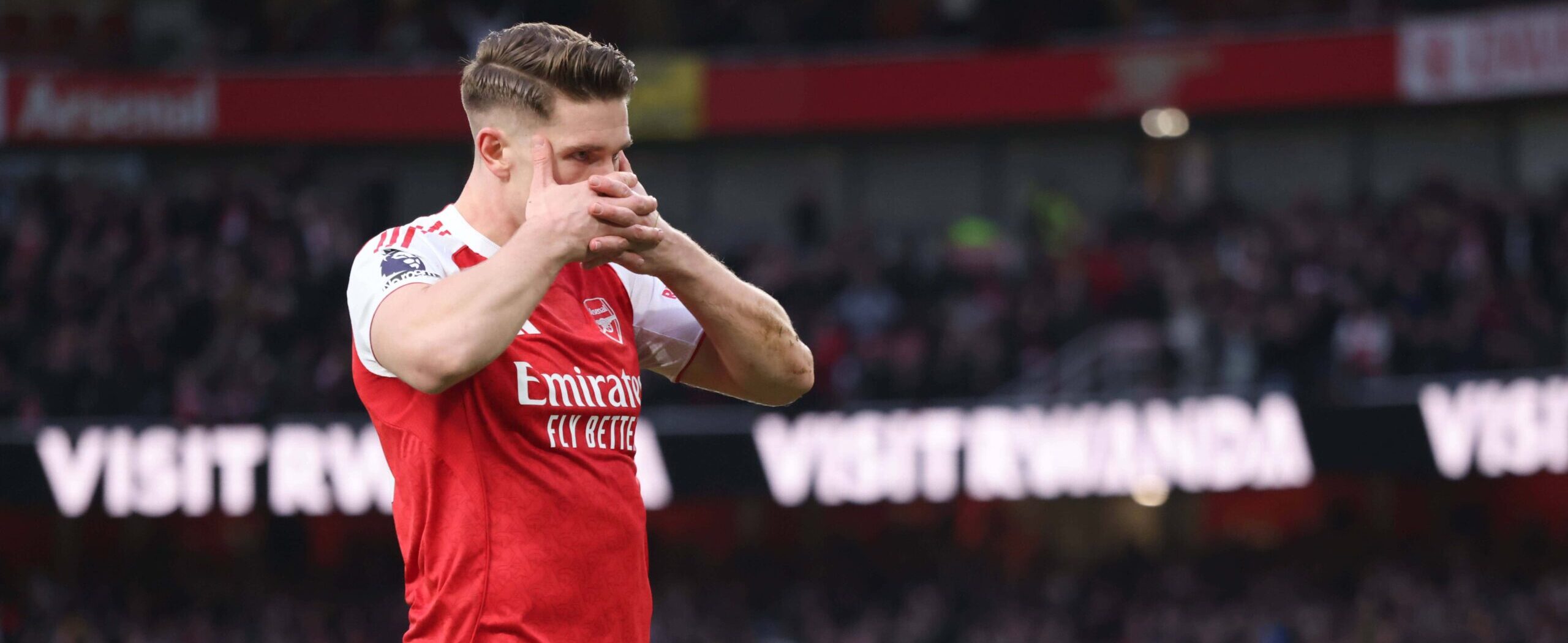
Two subtle but significant changes have helped Arsenal unlock the best version of Viktor Gyökeres, with the striker now emerging as one of the Premier League’s most in-form forwards.
Gyökeres’ Arsenal journey has been anything but straightforward. A brace against Leeds in just his second appearance hinted at a smooth transition, but that early promise faded into a quiet spell. A hamstring injury picked up after an impressive first half at Burnley in November then stalled his progress further.
When he returned, doubts grew. One goal in ten matches, a penalty against Everton, did little to silence questions about whether Arsenal’s £64 million summer investment would pay off. Fast forward to February, however, and the narrative has shifted sharply.
A brace in Saturday’s 3-0 win over Sunderland took Gyökeres to six goals in his last eight matches, his strongest run since arriving from Portugal.
How Arsenal changes have reignited Viktor Gyökeres form
Mikel Arteta has been careful not to overstate the transformation, but his post-match comments offered a clear insight into what has changed.
“Viktor, when you look at him, it's very difficult to understand his emotions,” Arteta said. “He doesn't seem too affected by the real highs or the lows.”
Behind that calm exterior, Arsenal have quietly adjusted how and when they use their striker. Two factors stand out: space and support.
Rather than asking Gyökeres to wrestle with deep defensive blocks from the first minute, Arsenal have increasingly introduced him when games open up. The 27-year-old may want to start every match, but being deployed more selectively has played to his strengths.
Space: timing his involvement
Gyökeres has looked far more dangerous when opponents are stretched. Against Inter Milan at the San Siro last month, he was introduced with the hosts chasing the game. The result was space to attack rather than a crowded penalty area.
That scenario led to one of his standout goals, latching onto a Gabriel Martinelli counter-attack before finishing decisively from the edge of the box. A similar pattern emerged against Sunderland, when late pressure from the visitors left room for Martinelli to break through and square for Gyökeres to score again.
Arsenal did not sign Gyökeres to be a permanent impact substitute, but the role has helped rebuild his confidence and sharpen his threat.
Support: Havertz changes the dynamic
The second key adjustment has come through personnel around him. Kai Havertz’s return from injury has altered Arsenal’s attacking balance in Gyökeres’ favour.
Rather than replacing the Swede, Havertz has often operated from midfield, effectively acting as a second striker. His runs beyond Gyökeres and willingness to attack the box have prevented the striker from becoming isolated.
That contrasts sharply with Martin Ødegaard’s tendencies. The Norwegian prefers to drop deep and dictate play, which has frequently left Gyökeres too detached from Arsenal’s build-up. The numbers underline the difference: Havertz has assisted Gyökeres twice in the last four matches, while Ødegaard is yet to set him up this season.
On Saturday, Havertz’s influence was decisive. The German rolled the ball into Gyökeres’ path for his first goal, finished emphatically at the near post. It was the strike of a forward playing with conviction rather than hesitation.
Signs of a striker finding rhythm
Having followed Arsenal’s attacking patterns closely over recent weeks, the change feels structural rather than temporary. Gyökeres is no longer asked to do everything himself. With Havertz linking play and others drawing defenders away, his role has simplified to what he does best.
However, it remains too early to draw firm conclusions about his long-term status as Arsenal’s title-leading striker. Consistency across a full run of starts will be the next test.
What is clear is that confidence has returned. Gyökeres now has more goals across all competitions in 2026 than any other Premier League player. Arsenal solving their centre-forward puzzle at this stage of the season is an ominous development for their title rivals.
Key insights
- Gyökeres has six goals in his last eight matches
- Arsenal have used him more when games are open
- Space on the counter has boosted his effectiveness
- Havertz’s return has provided vital support
- Confidence and simplicity have sharpened his finishing
What’s next
Arsenal face a crucial run of fixtures that will further test whether Gyökeres’ resurgence is sustainable. As opponents adapt, Arteta must decide when to trust him from the start and when to preserve the impact role that has reignited his form.
Much will depend on Arsenal’s midfield balance and Havertz’s positioning. If the current structure holds, Gyökeres could yet play a defining role in the title race rather than merely contributing from the margins.
Should Arsenal keep using Gyökeres as an impact weapon, or is it time to make him the undisputed starter?



0 Comments
First read message
Leave a comment
Your email address will not be published. Required fields are marked *